If you’ve been dreaming about Pacific Northwest scenic drives, you’re in the right place. This corner of North America packs a ridiculous amount of variety into a few hours of driving: rugged coastline, misty rainforests, glacier-capped volcanoes, high desert, waterfalls, and wine-country valleys. The trick is knowing which routes deliver the most “wow” per mile—and how to time them so you’re not stuck in fog, wildfire smoke, or bumper-to-bumper weekend traffic.
This guide breaks down the most rewarding drives across Washington and Oregon (with a few easy add-ons if you’re extending into Idaho or British Columbia). You’ll get route highlights, best seasons, realistic time estimates, and practical tips for stops, food, viewpoints, and safety—so you can build a road trip that feels effortless, not exhausting.
The Pacific Northwest is famous for dramatic landscapes shaped by volcanism, rivers, and the Pacific Ocean. In practical road-trip terms, a great route here usually has a mix of:
Also, a quick geography note: the term Pacific Northwest is often used for Washington and Oregon, sometimes including parts of Idaho and British Columbia. However you define it, the driving experience is built around the same elements: ocean, mountains, and big rivers cutting through volcanic terrain.
There isn’t one “perfect” season—there’s the season that matches your priorities. Here’s the honest breakdown:
Longer daylight, fresh green forests, and strong waterfall flow. Mountain passes may still have snow, but lower-elevation drives are near their best. Pack layers; mornings can be chilly.
Most mountain roads and trails are open, alpine wildflowers peak, and you’ll get the highest chance of clear views. Downsides: crowds and (in some years) wildfire smoke. Book lodging early for popular corridors.
Quieter roads, golden larches in some high areas, and crisp air. It’s underrated for coastal drives, where storms can be dramatic but beautiful. Be prepared for shorter days and early snow at elevation.
Great for storm watching on the coast and cozy cabin vibes. Many mountain routes require chains or may be temporarily closed. If you’re not comfortable with winter driving, focus on sea-level routes and major highways.
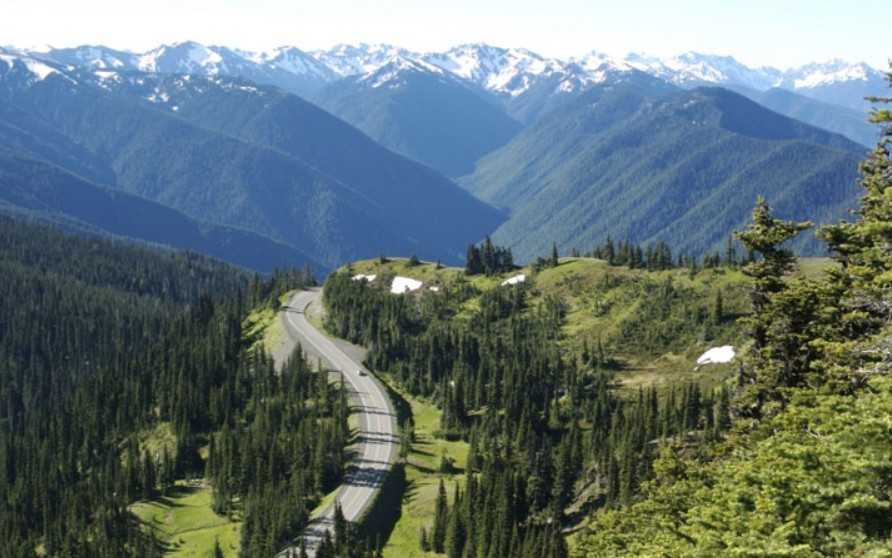
Think of this as a “greatest hits” loop: ocean beaches, temperate rainforest, and mountain viewpoints—often in a single day of driving. The classic route is to follow US-101 around the peninsula, adding side trips to places like Hurricane Ridge, Lake Crescent, and beach access points on the west coast.
Time needed: 2–4 days is ideal; you can rush it faster, but it’s more fun with room for hikes and sunsets.
Don’t miss: A short walk to a mossy rainforest trail, a sunset beach stop, and at least one lake viewpoint.
Pro tip: If you’re going in summer, start early—parking at popular trailheads fills quickly.
This is the “jaw-on-the-floor” mountain drive: sharp peaks, turquoise lakes, and roadside pullouts that look like screensavers. The North Cascades feel wilder and less developed than many national-park corridors, which is exactly the appeal.
Time needed: 1–2 days (or more if you’re hiking).
Best season: Mid-summer to early fall, when the road is reliably open and the weather is most stable.
Pro tip: Bring snacks and water; services are limited in the high stretches.
If you want the classic volcano backdrop, this is your route. Drive toward Mount Rainier National Park, then incorporate Chinook Pass (when open) for sweeping alpine views and summer wildflower meadows. Even if you don’t do long hikes, the short walks and overlooks deliver.
Time needed: A full day, or 2 days if you want sunrise/sunset and calmer pacing.
Don’t miss: A viewpoint where the mountain dominates the horizon—photos almost take themselves.
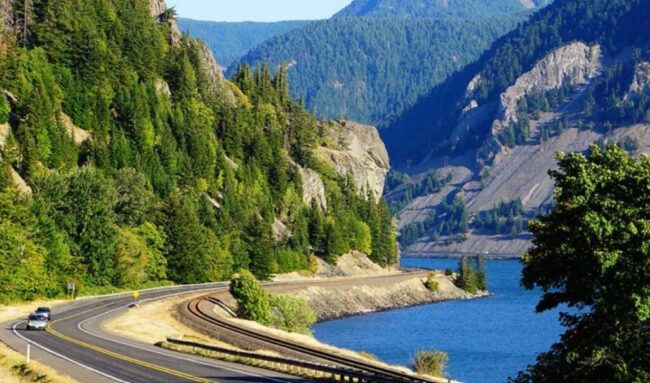
The Columbia River Gorge is one of the most dramatic “easy-access” landscapes in the region, with cliffside viewpoints and waterfall after waterfall. The Historic Columbia River Highway was designed specifically for scenery, and it still feels like a road trip time machine—stonework, curves, and overlooks built for lingering.
Time needed: Half day to a full day, depending on how many falls you stop for.
Don’t miss: At least one short waterfall hike and one high viewpoint where you can see the river carve through the Cascades.
Pro tip: Weekdays are calmer; weekends can get crowded in peak season.
For many travelers, the Oregon Coast is the ultimate scenic drive: sea stacks, wide beaches, lighthouses, and small towns with excellent seafood. The best strategy is to pick a stretch—north coast, central coast, or south coast—so you’re not doing constant long-haul driving.
Time needed: 2–5 days, depending on how much coastline you want.
Don’t miss: A tidepool stop, a windy headland viewpoint, and a slow morning in a coastal town with coffee and fresh pastries.
Pro tip: Fog is part of the vibe. If you want guaranteed sun, you’ll enjoy the coast most in late summer.
Starting near Bend, this route weaves past volcanic peaks and a string of sparkling lakes. It’s an easy win for families, couples, and anyone who wants “maximum scenery, minimum logistics.” Stop for short lakeside walks, paddleboarding, or a picnic with mountain views.
Time needed: Half day to a full day.
Best season: Summer to early fall. Snow can linger late, so check conditions if you’re going early.
This loop pairs two totally different PNW personalities: the airy, wind-swept Columbia River corridor and the deep, forested slopes around Mount Hood. Start in Hood River for coffee, then climb toward alpine viewpoints and timberline scenery.
Time needed: Full day.
Don’t miss: A farm stand stop in the valley (late summer/fall) and a viewpoint where the mountain feels close enough to touch.
If you associate the Pacific Northwest only with evergreens and drizzle, this drive will surprise you. The Yakima River Canyon is sunny, open, and dramatic—basalt cliffs, river bends, and golden light in the afternoon. It’s also one of the easiest scenic drives for shoulder season when mountain passes are unpredictable.
Time needed: 2–4 hours plus stops.
Pro tip: Pack binoculars; you may spot raptors riding the thermals.
The Palouse is a rolling landscape of farmland hills that turns into a living painting in late spring and early summer. Drive the back roads around Pullman, Colfax, and nearby viewpoints for wide-open panoramas and minimal crowds.
Time needed: Half day to a full day.
Best season: Late spring for vibrant greens, or early summer for golden tones.
Pro tip: Sunrise and sunset are spectacular here—soft light reveals the “waves” of the hills.
While not a single continuous highway, the ferry-linked San Juan Islands deliver a different kind of scenic driving—quiet roads, coastal overlooks, and charming small towns. It’s a great add-on if you want a slower pace after big mountain days.
Time needed: 2–3 days to do it justice, including ferry time.
Pro tip: Plan ferries in advance during peak months; sailing times shape your whole day.
If you’re overwhelmed by options, pick based on the experience you want most:
You don’t need luxury lodging to make these routes feel special. Small tweaks can turn a standard drive into a memorable trip:
Yes—most of the routes listed are paved and well-traveled. The main challenge is seasonal: snow, fog, and rain can change conditions quickly, so planning matters more than driving skill.
Not for the core scenic routes. A standard car is fine for major highways and byways. If you’re chasing remote trailheads or winter conditions, consider AWD/4WD and carry chains when required.
Drive on weekdays, start early, and visit popular spots during shoulder season. Also, spend more time on “connector” roads between headline destinations—those often become your favorite moments.
You Might Also Like: Pacific Northwest Hidden Gems: Discover Nature’s Best-Kept Secrets
No matter how you stitch them together, the best Pacific Northwest scenic drives are the ones that leave you room to wander—an unplanned overlook, a short trail you didn’t expect to love, a small-town bakery that becomes “the place” you still think about months later. Start with one anchor route (coast, gorge, or mountains), keep your days realistic, and let the region’s variety do the rest. By the time you’re heading home, you’ll already be plotting the next loop.
If you are planning New Orleans haunted tours travel, prepare for a trip where the…
Waterfalls are one of nature’s most awe-inspiring wonders, and the United States is home to…
The East Coast of the United States is often overlooked when it comes to surfing,…
If you want a more memorable island trip, this Hawaii local cuisine guide is the…
If you’re searching for US wellness retreats best spas that genuinely help you reset—physically, mentally,…
Planning a first trip to Yellowstone can feel huge—especially with little adventurers in tow. This…